

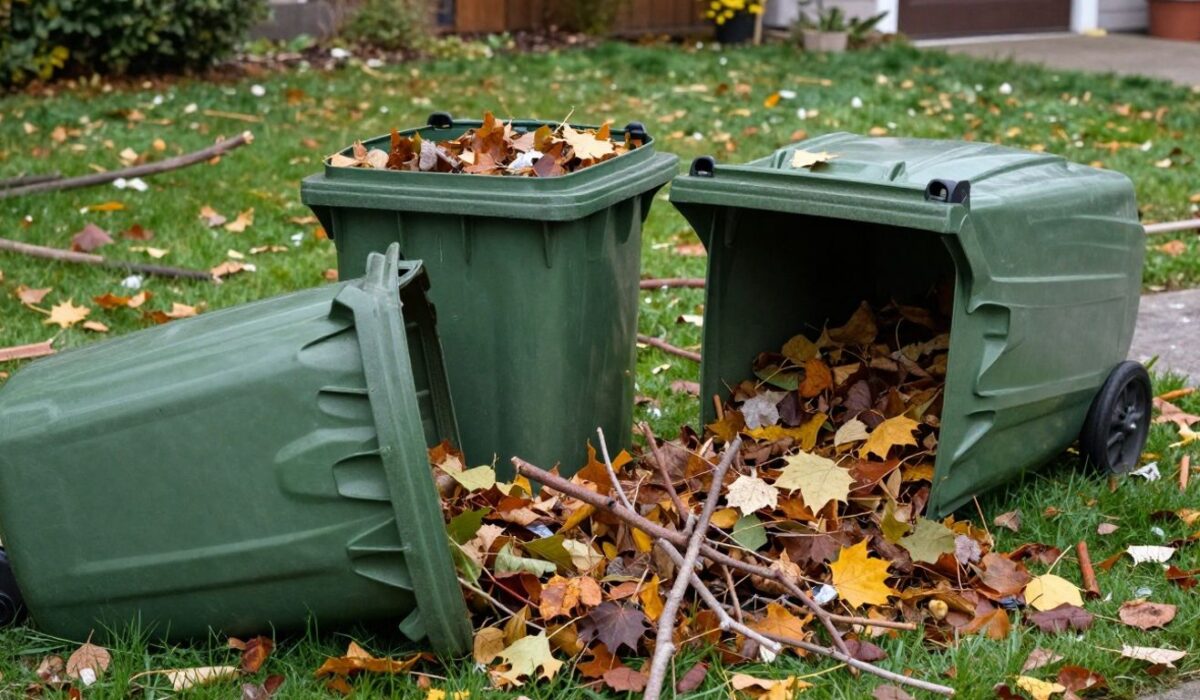
Ottawa’s yard waste collection program is one of the most generous in Ontario, with weekly pickup with no limit on volume, as long as material is properly set out. Yet missed pickups are one of the most common complaints we hear from Ottawa homeowners, and almost every missed pickup comes down to a small, avoidable preparation error.
This guide covers exactly how Ottawa’s leaf and yard waste program works, the specific mistakes that cause materials to be left at the curb, what changed with the March 2026 collection contract, and what to do when city collection isn’t designed to handle the volume your property generates.
How Ottawa’s Yard Waste Collection System Works

Under the City of Ottawa’s Solid Waste Services By-law (No. 2024-453, as amended by By-law 2025-467), leaf and yard waste is collected weekly from all eligible residential properties with curbside collection. There is no limit on the quantity you can set out — unlike the three-item limit that applies to regular garbage — provided every piece is properly contained and set out correctly.
Yard waste must be placed at the curb after 6 PM the night before and no later than 7 AM on your collection day.
The March 2026 Collection Contract Change
As of March 30, 2026, a new curbside waste collection contract took effect across Ottawa. One of the most significant changes for yard waste: leaf and yard waste must now be set out separately from your green bin. Before this change, some residents were placing yard material in or alongside their green bin. Under the current rules, this will result in the yard waste not being collected.
Leaf and yard waste must go in one of two approved formats: a brown paper yard waste bag or an approved reusable container clearly labelled “Leaf and Yard Waste.” A reusable container can be labelled simply by writing on it, but it must have a detachable lid and handles. Plastic bags, including bags labelled compostable or biodegradable, are not accepted and will be left at the curb.
Collection days also changed for approximately half of Ottawa households under the new contract. If you haven’t confirmed your current collection day since March 2026, check the City of Ottawa Collection Calendar at ottawa.ca by entering your address. Do not rely on a schedule saved before that date.
What Ottawa Accepts as Yard Waste — and What It Doesn’t
Accepted
The City of Ottawa’s leaf and yard waste program accepts the following materials:
Leaves and grass clippings are the most straightforward items and make up the bulk of what most Ottawa residents set out. Both are collected throughout the year whenever they’re generated. One tip from the City’s own waste reduction guidance: grass clippings between 6 mm and 13 mm in length can be left on the lawn where they decompose naturally and feed the grass. Longer clippings should go in your yard waste bag or composter.
Garden debris, including spent annuals, vegetable plants, hedge and shrub trimmings, and weeds. If weeds have gone to seed, include them in the yard waste bag rather than composting them at home to avoid spreading seeds through your garden.
Branches and brush, subject to specific size requirements. Individual branches must be less than 7 centimetres (3 inches) in diameter. Tied bundles must be less than 120 centimetres (4 feet) in length and less than 60 centimetres (2 feet) in width. Bundles must be tied with biodegradable twine or natural string wire; duct tape and plastic twine are not accepted and will result in the bundle being left behind. Remove soil and compost from plant roots before bundling.
Not Accepted in Yard Waste
The following are commonly mistaken for yard waste but will not be collected:
- Sod and soil — these do not compost in the same way as plant material and contaminate the composting process
- Rocks and stones
- Treated, painted, or stained wood — this includes pressure-treated lumber, old fence boards, and deck material
- Branches exceeding the size limits — individual branches over 7 cm diameter or bundles over 120 cm length require separate disposal
- Pet waste — cat litter and dog feces belong in the green bin
- Pumpkins — despite being organic, these belong in the green bin, not yard waste
- Renovation wood or construction lumber — even untreated, this is construction debris and must go to a drop-off facility or a bin rental
The Most Common Mistakes That Cause Missed Pickups
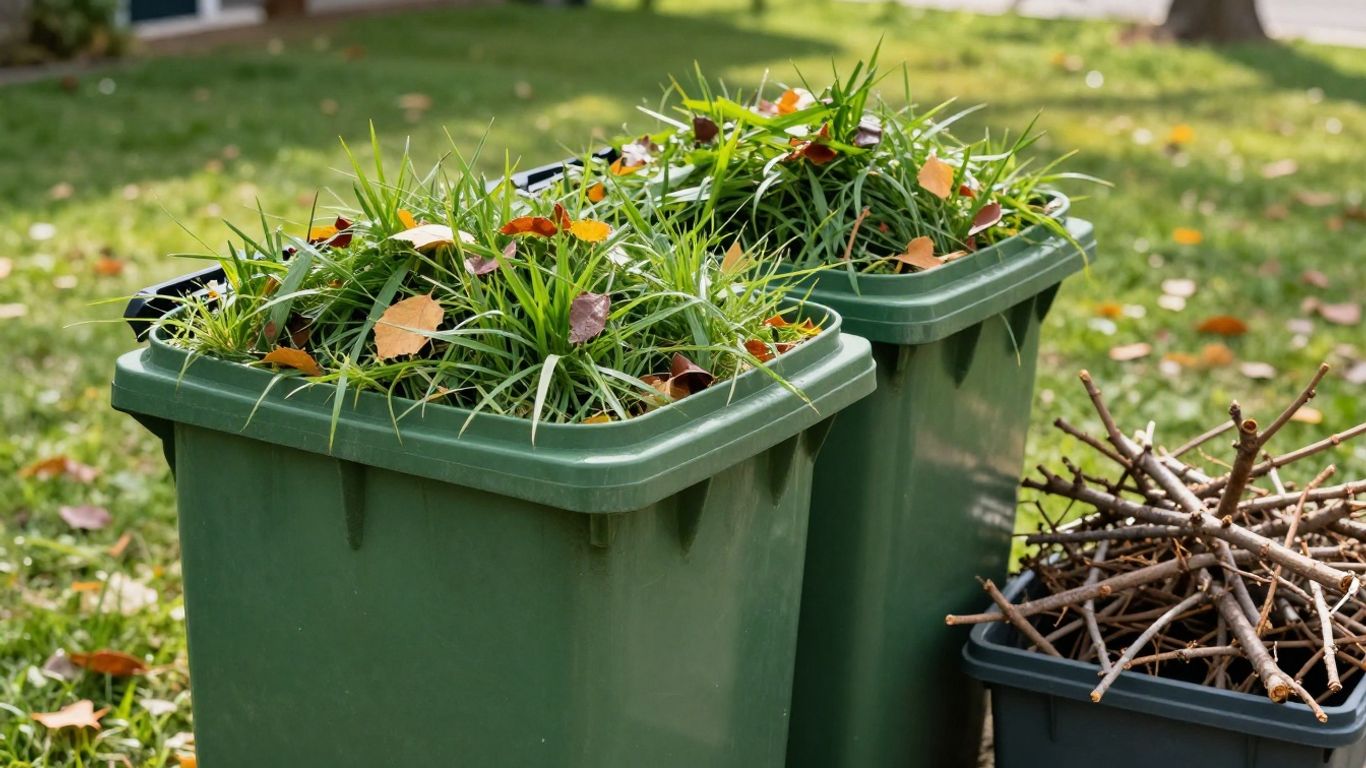
We hear about these regularly from Ottawa homeowners. Every one of them is avoidable.
Using Plastic Bags
This is the single most common cause of yard waste being left at the curb. Plastic bags, including bags marketed as biodegradable or compostable, are not accepted in Ottawa’s yard waste program. The material must be in brown paper bags or a labelled reusable container. If you’re purchasing bags at a hardware store or garden centre, confirm they are kraft paper yard waste bags before buying.
Mixing Yard Waste with the Green Bin
As of March 2026, leaf and yard waste must be set out in its own designated container, separate from the green bin. Setting yard waste bags next to or on top of a green bin can cause confusion for collection crews, and yard waste placed inside a green bin will either not be collected or will contaminate the organics stream. Keep the streams physically separated at the curb.
Oversized or Overweight Branches
Branches that exceed 7 cm in diameter, or bundles longer than 120 cm or wider than 60 cm, will not be collected. If you’ve had large trees pruned or removed, the resulting branches are almost certainly too large for curbside collection. These need to be cut down to size, chipped, or disposed of through a wood bin rental. At 613 Bins, our wood bin ($450/3 days) accepts clean wood and brush of any volume, ideal after a significant tree removal or major pruning job.
Using Wire or Plastic Twine to Bundle Branches
Branches bundled with wire, duct tape, or plastic twine will not be collected. The requirement is biodegradable material, natural jute twine, sisal, or cotton string. This is a detail that trips up many homeowners who grab whatever is handy in the garage.
Mixing Yard Waste with Other Materials
Yard waste mixed with any other type of waste stream, garbage, recyclables, or renovation debris, will not be collected. If you’re doing a yard cleanup that also involves clearing old lumber, broken garden furniture, or other non-organic material, those items need to be separated and disposed of through the appropriate channel. Renovation and construction materials cannot go in yard waste bags under any circumstances.
Setting Out Material at the Wrong Time
Items placed at the curb more than 13 hours before your collection day, in other words, before 6 PM the evening prior, may be considered illegal dumping under the City’s Parks and Facilities By-law No. 2004-276, which can result in a fine. Don’t set yard waste out the morning of the day before your collection.
Using an Outdated Collection Schedule
With collection days changing for roughly half of Ottawa households in March 2026, many residents are working from old schedules. If your yard waste is consistently not being picked up and you can’t identify a preparation error, the first thing to verify is whether your collection day has changed.
Seasonal Yard Waste — What Changes Throughout the Year
Ottawa’s yard waste program is year-round and weekly, but the volume and type of material change significantly by season.
Spring (April–May) generates a mix of leftover fall leaves that were buried under snow, winter-damaged branches, dead perennial growth from garden beds, and early grass clippings. This is typically the highest volume period for most Ottawa homeowners. If your spring cleanout generates more material than fits in a few bags, break it across multiple collection weeks or consider a bin for the overflow.
Summer (June–August) is primarily grass clippings and ongoing garden trimmings. Clipping volume can be reduced significantly by leaving short clippings on the lawn, as the City recommends this feeds the grass and reduces what you’re bagging. If you’ve used herbicides on your lawn, the City’s guidance is to leave clippings on the lawn for four cuts before composting them.
Fall (October–November) is the peak volume season for most Ottawa properties. A mature tree can drop hundreds of kilograms of leaves in a single fall. The no-limit curbside collection is designed for exactly this, but the volume can feel unmanageable on properties with multiple large deciduous trees. For properties generating significant leaf volume, backyard composting is worth investing in, as it handles leaves and grass year-round and produces usable compost for garden beds.
Winter generates minimal yard waste. If you have any garden cleanup not been completed before the ground freezes, it will be kept until spring collection resumes.
What to Do When City Yard Waste Collection Isn’t Enough
Ottawa’s curbside yard waste program handles routine seasonal cleanup well. It does not handle three situations effectively:
Large-volume storm cleanup. After a significant ice storm or wind event, the volume of fallen branches and debris on a single property can exceed what curbside collection can absorb in one or two pickups. Large branches exceeding the size limits cannot go curbside at all.
Major tree removal. When a mature tree is removed, whether by a contractor or a homeowner, the volume of wood, branches, and debris generated far exceeds what yard waste bags can contain. Even chipped material, once it’s a significant volume, is impractical to manage in paper bags week by week.
Mixed yard and renovation cleanouts. When a backyard project involves both organic yard material and construction debris, such as a fence replacement, deck removal, or retaining wall rebuild, the materials need to be separated for disposal. The organic material can go curbside; the construction debris cannot.
For any of these situations, a bin rental is the practical solution. Our wood bin ($450/3 days) accepts clean wood and brush of any volume from tree removal, pruning jobs, and deck or fence demolition. Our general debris bins (starting at $409/3 days for the 12-yard) handle mixed renovation and yard cleanout material, where construction debris is part of the load.
The key difference: a bin rental puts a dedicated, large-capacity container on your property for days at a time, removing the constraint of preparing and setting out material on a specific weekly schedule. You work at your pace, fill the bin, and we collect it when you’re ready.
What to Do If Your Yard Waste Isn’t Collected
If your yard waste is left at the curb on a scheduled collection day, here is the correct sequence:
First, check your preparation. Review every item against the rules in this article: bag type, branch dimensions, bundle ties, and stream separation from the green bin. The vast majority of missed pickups have a preparation cause. If you find an error, correct it and set the material out on your next collection day.
Second, confirm your collection day. Use the City of Ottawa Collection Calendar at ottawa.ca to verify your current schedule, especially if your day may have changed under the March 2026 new contract. Use the City of Ottawa Collection Calendar at ottawa.ca to verify your current schedule, especially if your day may have changed under the March 2026 new contract.
Third, wait one additional day. Collection crews occasionally run behind schedule on high-volume days. If material is still there after one additional day, it was likely not collected for a specific reason.
Fourth, report the missed collection. Use the Service Ottawa portal at ottawa.ca or call 311. Provide your address, the date, and a description of what was set out. The City tracks missed collections and responds to reports.
Do not leave uncollected yard waste at the curb indefinitely. Rotting plant material attracts rodents and can violate property maintenance standards.
Frequently Asked Questions
How often is yard waste collected in Ottawa?
Leaf and yard waste is collected weekly from all eligible residential properties with curbside collection, with no limit on the quantity you can set out as long as it’s properly prepared. This applies year-round, not just during spring and fall peak seasons.
Can I use green compostable plastic bags for yard waste?
No. The City of Ottawa does not accept plastic bags for yard waste, including bags labelled as compostable or biodegradable. You must use brown kraft paper yard waste bags or an approved reusable container clearly labelled “Leaf and Yard Waste.”
Does my green bin collection happen weekly or bi-weekly?
Your green bin is collected weekly, every week. This is a frequent point of confusion. Only garbage collection is bi-weekly. Green bin, leaf and yard waste, and recycling (alternating blue and black bins) are all weekly collections.
What changed about yard waste collection in March 2026?
As of March 30, 2026, leaf and yard waste must be set out separately from your green bin under the new collection contract. Previously, some residents were combining these streams. Additionally, collection days changed for approximately half of Ottawa households — confirm your current day at the Ottawa Collection Calendar on ottawa.ca.
Can I put a fallen tree branch out for yard waste collection?
Only if it meets the size requirements. Individual branches must be less than 7 cm (3 inches) in diameter. Tied bundles must be less than 120 cm (4 feet) in length and less than 60 cm (2 feet) in width, tied with biodegradable twine. Anything larger than these limits will not be collected curbside. For significant tree removal or storm cleanup generating oversized branches, a wood bin rental is the appropriate disposal method.
What do I do with sod, soil, or rocks from my yard?
These are not accepted in Ottawa’s leaf and yard waste program. Sod and soil in small quantities can often be repurposed on site — used to fill low spots in the lawn or added to garden beds. For larger volumes from landscaping projects, a 5-yard heavy material bin ($375/3 days) is the right disposal option. Rocks and stones generally need to be taken to a drop-off facility or disposed of through a private hauler.
My yard waste keeps getting left behind. What should I check?
The most common causes in order of frequency: plastic bags instead of paper bags, branches exceeding the 7 cm diameter or 120 cm length limits, bundle ties made of wire or plastic twine, yard waste mixed with other material, and outdated collection day information. Check each of these before reporting a missed collection.
A Note on the City of Ottawa Waste Explorer
For any material you’re unsure about, a specific type of plant, a garden product, treated wood from an old raised bed, the City of Ottawa Waste Explorer at ottawa.ca lets you search by item name and returns the correct disposal stream. It is updated as rules change and is the most reliable source for edge cases not covered by general guidelines.
When city collection doesn’t cover your volume, whether that’s storm cleanup, a major tree removal, or a backyard renovation project, fill out our Request Form at 613bins.com or call us at 613-894-2467. We’ll help you choose the right bin and get it delivered to your Ottawa property.
1 Comment
Comments are closed.