
What the City Takes, What It Won’t, and When You Need a Bin
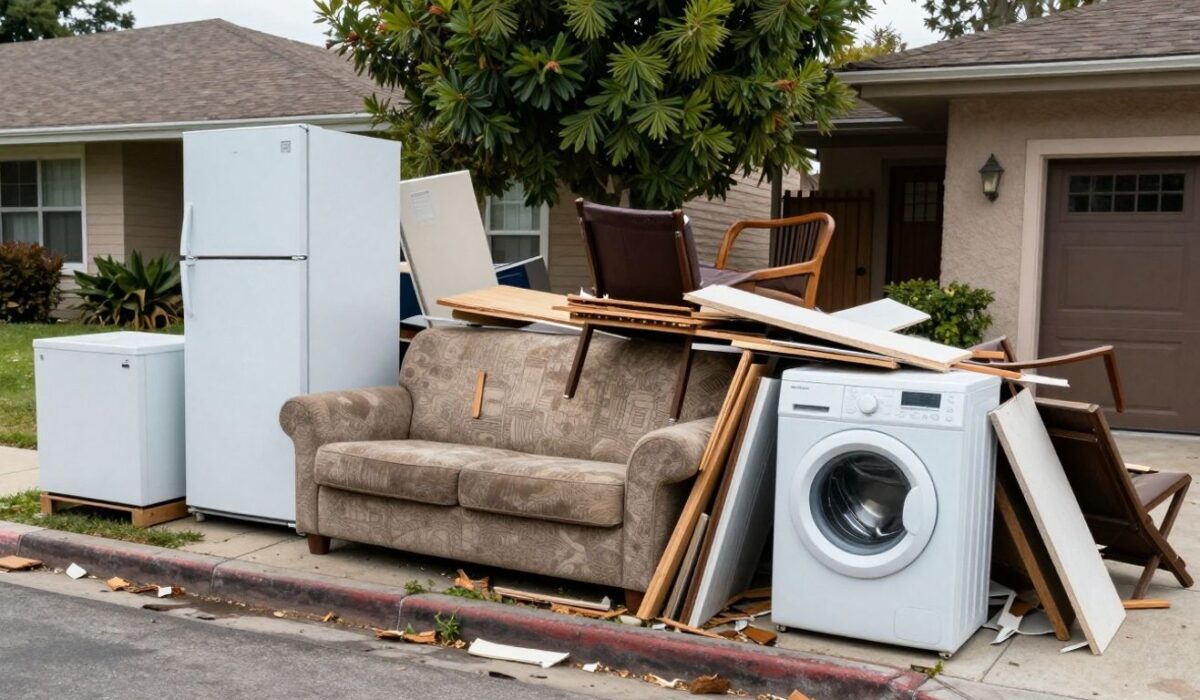
If you’ve ever dragged an old couch, a broken appliance, or a pile of renovation debris to the curb — only to watch the truck drive past — you’ve run into one of Ottawa’s most misunderstood waste programs. The City of Ottawa does offer curbside large-item collection, but the rules around what qualifies, how items must be set out, and what is explicitly excluded are specific enough that many residents get caught off guard.
This guide covers exactly what the City will and won’t pick up, what changed with Ottawa’s three-item garbage limit, and when renting a bin from 613 Bins in Ottawa is the faster, cleaner solution for furniture removal, appliance disposal, and renovation debris.
How Ottawa’s Curbside Collection Actually Works
Ottawa’s curbside waste program runs on a bi-weekly garbage schedule. On your collection day, the City allows residents to set out **up to three items of garbage**, which can include any combination of the following:
- A standard garbage bag (up to 140 litres, under 15 kg/33 lbs)
- A garbage bin or container with a removable lid (up to 140 litres, under 15 kg)
- A bulky item — meaning large furniture or household items that cannot fit in a bag or bin
This three-item limit has been in place since September 2024 under the City’s updated Solid Waste Services By-law (No. 2024-453, amended by By-law 2025-467). Before that change, residents could set out up to six items. The reduction was introduced to decrease landfill volume and encourage greater use of the green bin and blue/black recycling streams.
Recycling (blue and black bins, now managed by Circular Materials as of January 2026) and green bin organics remain weekly collections with no item limits. Leaf and yard waste in approved paper bags also does not count toward the three-item garbage limit.
To find your specific collection day and confirm your schedule, use the City of Ottawa Collection Calendar at ottawa.ca. Collection days for some households changed as of March 30, 2026. Items must be set out at the curb after 6 PM the night before and no later than 7 AM on collection day.
What the City Will Pick Up Curbside (Bulk Items)
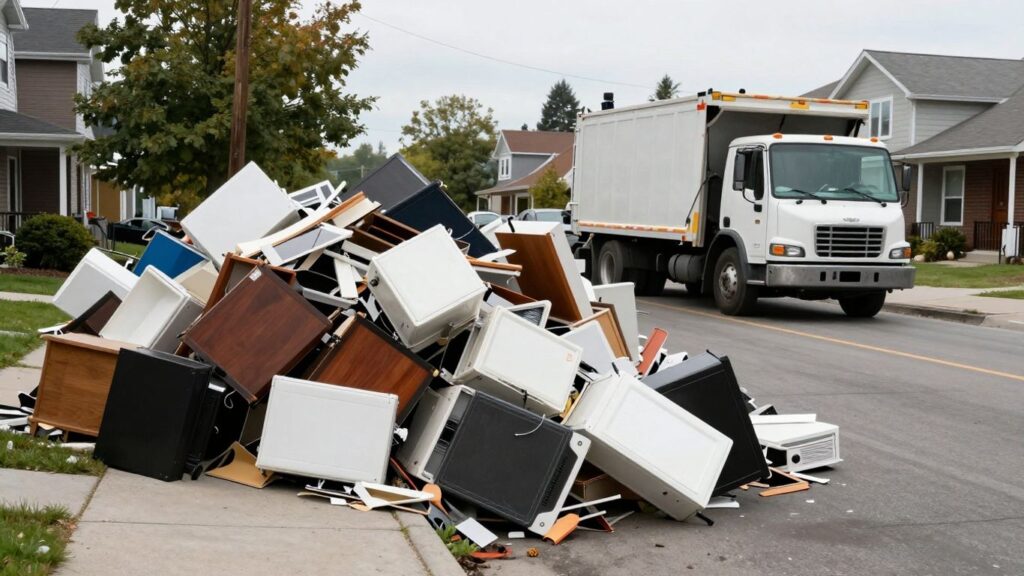
Under Ottawa’s curbside program, the following large items are accepted at the curb and count as one item each toward your three-item limit:
- Sofas, couches, and sectional pieces
- Mattresses and box springs
- Chairs, desks, cabinets, and tables
- Carpets (rolled)
- Patio furniture and large plastic outdoor items
- Toilets and sinks (dismantled)
Each of these counts as one item. If you’re replacing a couch and a mattress on the same collection day, that’s two of your three items — leaving room for one garbage bag or bin.
Important: bulky items cannot be bagged and cannot have a bag attached to them. If a large item is bagged when the crew arrives, it will not be collected, and a courtesy tag will be left at your property.
What the City Will NOT Pick Up — This Is Where Most Residents Get Caught
This is the part of Ottawa’s waste program that surprises most homeowners, particularly those coming off a renovation or appliance replacement.
Appliances — None of Them
The City of Ottawa does not collect appliances such as stoves, refrigerators, freezers, air conditioners, dryers, dishwashers, hot water tanks, furnaces, or oil tanks at the curb. This applies regardless of size or condition. These items contain recyclable parts and must be handled through separate channels.
For refrigerators, freezers, air conditioners, and dehumidifiers specifically, the cooling chemicals (refrigerants) must be removed and the unit tagged by a certified technician before it can be accepted at the Trail Road Landfill. An untagged unit will be refused at the gate.
If you’re replacing a fridge, stove, washing machine, or any major appliance, your options are: retailer take-back programs (many appliance retailers will remove the old unit on delivery), private haulers, or a bin rental if you’re replacing multiple appliances as part of a broader renovation.
Renovation Debris — Not Collected Curbside
Drywall, lumber, concrete, asphalt shingles, old windows, doors, flooring, bathroom fixtures from a renovation, and similar construction and demolition materials are not accepted through Ottawa’s regular curbside collection. This applies whether the debris comes from a DIY weekend project or a full contractor-managed renovation.
Renovation debris must either be taken to a City of Ottawa drop-off facility or disposed of through a private bin rental. For anything beyond a car-load or two, the bin rental is almost always the more practical and cost-effective option.
Electronics (E-Waste)
The City of Ottawa does not collect electronic waste as part of its curbside garbage collection. TVs, computers, monitors, printers, and similar electronics must be dropped off at participating retailers or at a City drop-off location.
Hazardous Materials
Paint (liquid), batteries, propane tanks, solvents, motor oil, pesticides, and similar household hazardous waste are not accepted in curbside collection. The City runs periodic Hazardous Waste Drop-Off Events throughout the year; dates and locations are listed on the City of Ottawa website and updated regularly.
Tires
Tires are not accepted curbside. Most tire retailers will accept old tires at the point of replacement.
The Three-Item Limit and What It Means for Larger Cleanouts
The three-item limit is straightforward for regular household waste, but it creates a real bottleneck for homeowners doing anything beyond routine disposal. Consider some common scenarios:
Estate cleanout. A family clearing a parent’s home typically has furniture, boxed items, appliances, and miscellaneous household goods filling multiple rooms. At three items per bi-weekly collection, a full estate cleanout would take months using curbside collection alone — assuming none of the items are appliances or renovation materials, which aren’t accepted anyway.
Post-renovation cleanup. A kitchen renovation generates drywall scraps, old cabinetry, flooring, fixtures, and packaging — none of which qualify for curbside pickup. All of it is renovation debris and must go to a drop-off or into a bin.
Appliance replacement. Replacing a fridge, stove, and dishwasher at once — common in a full kitchen reno — means three appliances that the City will not touch at the curb.
In all three scenarios, renting a bin is not just an alternative to city collection — it’s often the only practical option.
When a 613 Bins Rental Is the Right Call
At 613 Bins, we deliver bins across Ottawa for exactly the situations where city collection falls short. Here’s how our bin lineup maps to common bulk waste and cleanout scenarios:
12-Yard Bin ($409/3 days) — right for a single-room cleanout, a furniture swap across two or three rooms, or a small bathroom renovation where city pickup won’t take the debris. Holds approximately 75 garbage bags of material. At 6.5 ft wide and 4 ft tall, it fits in most standard Ottawa residential driveways.
16-Yard Bin ($429/3 days) — our most popular choice for full basement or garage cleanouts, kitchen renovations, and appliance-plus-debris combinations. Holds approximately 95 garbage bags. This is the bin we typically recommend when a homeowner says, “I’m not sure if the 12-yard is big enough.” It almost always is, and it gives you room to work without watching the load level constantly.
20-Yard Bin ($459/3 days) — suited for larger estate cleanouts, multi-room renovations, or situations where debris is accumulating over several days. Holds approximately 120 garbage bags.
30-Yard Bin ($509/3 days) — for major renovation projects, large commercial property cleanouts, or new construction waste. At 16 ft long and nearly 7 ft tall, this bin requires clear site access and adequate truck maneuvering room.
For projects involving concrete, soil, or asphalt, none of which can go in a standard debris bin, we offer dedicated 5-yard ($375/3 days) and 10-yard ($450/3 days) heavy material bins.
All general debris bins include 1 tonne of weight. Additional weight is billed at $0.15/kg beyond that, prorated to the kilogram. There are no fuel surcharges and no environmental fees.
Preparing Items for Curbside Collection — If City Pickup Is Your Route
If your disposal needs fall within what the City accepts, here is how to prepare correctly to avoid a missed pickup:
Furniture and large household items can be set out as-is, loose at the curb. Do not bag them. Ensure they are accessible and not blocking the sidewalk or road.
Toilets and sinks must be dismantled before curbside collection. A toilet set out in one piece does not qualify; it needs to be broken down.
Carpets should be rolled tightly. Loose rolled carpet or carpet cut into manageable sections is easiest for collection crews to handle.
Items that won’t fit in a bag, large plastic items, shelving units, and broken outdoor furniture count as one bulky item each toward your three-item limit.
Yellow bags are available for purchase at City-approved distribution locations if you have more than three items of garbage that don’t qualify as bulk items. Each yellow bag counts as one additional garbage item beyond the three-item limit.
Always check your Collection Calendar at ottawa.ca before setting items out. Collection days for some Ottawa households changed in March 2026, and statutory holidays shift collection to the next business day.
Frequently Asked Questions
Can I put renovation debris out with my regular curbside garbage?
No. Renovation debris, such as drywall, lumber, old flooring, fixtures, concrete, and shingles, is not accepted through Ottawa’s curbside collection program. It must be taken to a City drop-off facility or disposed of through a private bin rental. This applies regardless of how small the renovation was. Even a single replaced bathroom vanity and its associated drywall patch material fall outside what curbside collection accepts.
The City didn’t pick up my item — what do I do?
The City leaves a courtesy tag on items not collected, explaining the reason. Common reasons are: the item exceeded the three-item limit, a bulky item was bagged, or the item is in a category not accepted curbside (appliances, electronics, renovation debris). Check your collection calendar to confirm it was a scheduled collection day, review which category your item falls into, and either adjust the set-out or arrange alternative disposal.
Can I put a fridge or stove at the curb?
No. Appliances of any kind are not collected curbside by the City of Ottawa. For fridges, freezers, and air conditioners specifically, the refrigerant must be removed by a certified technician and the unit tagged before it can be accepted at a City waste facility — an untagged unit will be refused. For stoves, washers, dryers, and similar non-Freon appliances, contact a private hauler, check whether your retailer offers take-back on delivery of a new unit, or include them in a bin rental if you’re doing a broader renovation cleanout.
Can I self-haul renovation debris to a City drop-off facility?
Yes — the City of Ottawa operates drop-off facilities that accept construction and demolition debris from residents. For small loads from a minor repair or single-room project, a self-haul trip can work. For anything generated by a full renovation, the time, vehicle wear, and multiple trips required typically make a bin rental the more practical and cost-effective option.
How do I book a bin from 613 Bins?
Fill out our Request Form at 613bins.com or call us directly. We deliver Monday through Saturday between 7 AM and 6 PM, and we can accommodate special Sunday requests. For early morning contractor starts, book the bin the day before delivery routes are built around geography, not time windows, and a same-morning request rarely guarantees an early arrival. We confirm all details, bin size, delivery address, and placement instructions within one business day of your request.
A Final Note on Using the Waste Explorer
The City of Ottawa Waste Explorer at ottawa.ca is the most reliable tool for confirming where a specific item needs to go, whether it’s an old TV, a container of dried paint, a propane tank, or a piece of broken gym equipment. Search by item name, and it returns the accepted disposal method and the nearest drop-off location. We recommend checking it before your cleanout if you have items you’re unsure about, so you know upfront what can go in a bin and what needs a separate trip.
For everything else — the furniture the City won’t take fast enough, the renovation debris that has nowhere to go curbside, the appliances that need to move before your contractor arrives Monday — that’s where we come in.
Ready to book? Fill out our Request Form at 613bins.com or contact our team directly.
1 Comment
Comments are closed.